atwork is now Microsoft Authorized Education Partner

atwork is now Microsoft Authorized Education Partner

We at atwork are now official Microsoft Authorized Education Partner (AEP). The AEP program authorizes atwork to purchase and re-sell academic priced products to Qualified Educational Users. Microsoft informs about the details on https://www.mepn.com/MEPN/AEPHome.aspx. The short description reads as follows: The AEP program authorizes partners to purchase and re-sell academic priced products to Qualified Educational Users. The program is designed to increase customer and partner satisfaction and to improve communication and service to our partners with a standard set of terms and conditions, improved training, and new resources and tools to keep the channel informed with up to date information on new products and events, in addition to guarding against channel miss-selling of academic licensing. ...

September 16, 2016 · 1 min · Toni Pohl
Check the Azure services status

Check the Azure services status

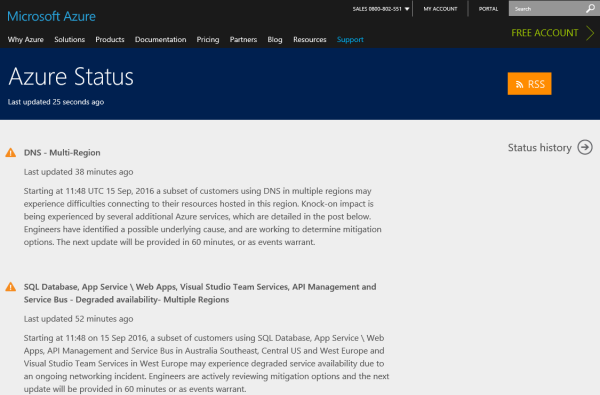
If you have systems running on the Microsoft Azure platform and issues occur, check out this helpful status page! https://azure.microsoft.com/en-us/status/ …and the history https://azure.microsoft.com/en-us/status/history/ Tip: You can also subscribe to the RSS feed! https://azure.microsoft.com/en-us/status/feed/ Hope this helps – just in case!

September 15, 2016 · 1 min · Toni Pohl
No more ORG email addresses for MSA

No more ORG email addresses for MSA

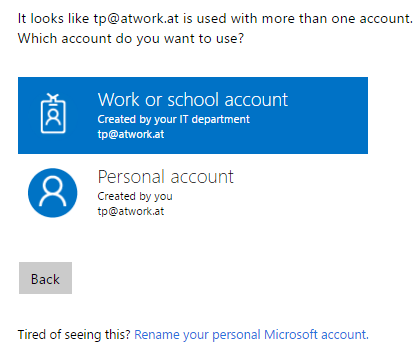
Today Microsoft announced that Microsoft Accounts “MSA” (formerly known as “Live-ID”) no longer can be created with a work email address. That’s important for millions of users. What does this mean? Well, this article Cleaning up the #AzureAD and Microsoft account overlap explains all the details: “Starting today, we’re blocking the ability to create a new personal Microsoft account using a work/school email address, when the email domain is configured in Azure AD.” ...

September 15, 2016 · 1 min · Toni Pohl
Delegate365 announcement about upcoming changes in version 6

Delegate365 announcement about upcoming changes in version 6

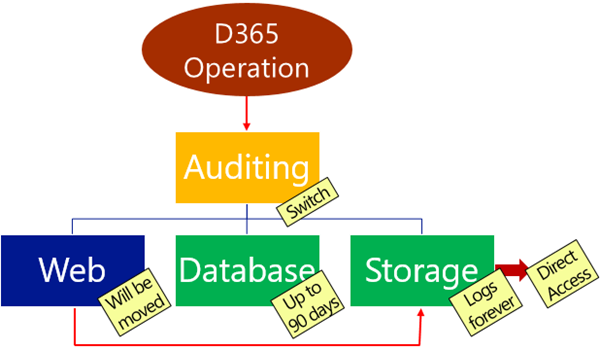
Delegate365 will receive a major update in October. This will be Delegate365 version 6 and will include a change in the audit logging system, a new license history and a preview for more custom automation features. Read the first details here. Change of logging: With the next update to version 6, the audit logging will be changed. There is a switch implemented which allows D365 to store logged data in various spaces and formats. The following graphics shows an overview at a glance about the planned features. Data will no longer be stored in the Web in CSV format, but in the D365 database for up to 90 days and in Azure storage in JSON format forever. Direct Access of Azure storage: Besides of the almost unlimited space in Azure storage, data in that storage can be accessed directly (if you have the permissions). This allows Portal Admins to generate a URL with a token with an expiration date to download the produced log files. The token is issued by D365, as tool you can download the logs with the cost free Microsoft Azure Storage Explorer. Daily Office 365 license statistics: To see the real usage of licenses per OU and per day, week, month or year, D365 stores daily data from now on. This data will be available for further usage. More Automation: We got a lot of feedback about implementing custom actions in D365, for example setting specific user properties, assigning custom licenses for specific users, setting Skype for Business policies for users in OU’s and so on. To avoid a cost intensive customization we decided to go another way: We are implementing scripts (like “Macros”) with a powerful editor with intellisense that can execute… PowerShell! Yes, you read correctly. D365 will support PowerShell commands and whole scripts for fulfilling custom tasks in Office 365! We are currently developing and testing and plan to update D365 with this module in mid to late October. The working title for this feature is “D365 Automation”. Any other suggestions? More: Improvements in the Sync operation, fixes and some more features… You see there are cool features coming to Delegate365 version 6. Stay tuned! ...

September 12, 2016 · 2 min · Toni Pohl
Snapshots of aOS community event in Aix-en-Provence

Snapshots of aOS community event in Aix-en-Provence

This week Martina and I have been part of the aOS community event in Aix-en-Provence in South France. See our session presentation and some snapshots of the event here. The aOS Community organizes and supports all types of events promoting the sharing and exchange of Microsoft technologies in various communities in public meetings, conferences and online meetings targeting primarily French speaking countries. The event took place in Aix-en-Provence on 6th September at the campus of YNOV, a school building with perfect infrastructure for such an event (rooms, space, seats, projector, aircondition and fast WiFi). The event web page is Journée aOS Aix en Provence. ...

September 11, 2016 · 1 min · Toni Pohl
Delegate365 Roles and Notifications

Delegate365 Roles and Notifications

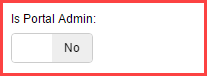
Delegate365 can send notifications for specific operations. Here’s a short overview of roles and in which situations notifications are sent. Who can get notifications? In Delegate365 we have these roles a user can have for using the portal. Portal Admins: They have full access to all features and can configure D365. Scope Admins: They have administrative management features for “their” users, licenses and groups. The difference between Portal and Scope Admins is simply the switch “Is Portal Admin” in the administration / manage administrators and Edit admin feature (see the full screenshot below). License Admins: This can be Portal Admins or Scope Admins. They are defined in the administration / manage administrators and Edit admin feature with the switch “License Administrator” (see the full screenshot below). They can manage license requests. Users: Standard users who can use the D365 Self service password reset feature (SSPR). All user types can receive emails (or SMS) from D365, but their email notification must be configured. ...

September 10, 2016 · 3 min · Toni Pohl
Vorteile von Azure Websites

Vorteile von Azure Websites

Microsoft Azure ist eine Plattform zum hochverfügbaren, skalierbaren und sicheren Betrieb von IT-Services, von virtuellen Maschinen bis hin zu Websites. Im Gegensatz zu herkömmlichen Hosting-Lösungen bietet Azure eine Vielzahl von zusätzlichen Services. Nur, welche Vorteile bieten Azure Websites im Vergleich zu anderen Angeboten von Providern? Hier einige Gründe für den Einsatz von Azure Websites. Die Basis Weblösungen werden unter Microsoft Azure als “App Services” bezeichnet (siehe https://azure.microsoft.com/en-us/services/app-service/). Ein App Service kann eine Web App, Mobile App, Logic App oder API Apps sein. Diese (und weitere) Dienste können beliebig kombiniert werden. Eine “Standard”-Website ist eine “Web App”, welche auf einem vorkonfiguierten Webserver in einer bestimmten Größe läuft. Dies ist eine abgesicherte, virtuelle Maschine, die vom Provider als Platform-as-a-Service (PaaS) System bereitgestellt wird. Dabei kümmert sich der Betreiber (Microsoft) darum, dass die Website hochverfügbar und sicher läuft und dass es Backups, LoadBalancer, Berechtigungen und vieles mehr gibt. Also ein “Rundum-Paket” für den sicheren Betrieb. ...

August 30, 2016 · 5 min · Toni Pohl
Ensure that a Virtual Machine in Azure is stopped

Ensure that a Virtual Machine in Azure is stopped

Since it still happens from time to time that customers forget that their Virtual Machines (VMs) in Azure need to be deallocated to stop producing costs, here’s a small reminder for all Azure users who are using the Azure Portal https://portal.azure.com to administer their VMs. A running VM is displayed as here: To stop a VM, click the Stop menu and confirm. Now the VM is being stopped and the deallocating process starts. ...

August 29, 2016 · 2 min · Toni Pohl

Administer Linux with OMS

Recently, the team of the Operations Management Suite announced that Linux management with Operations Management Suite (OMS) is now generally available. Now generally available: Linux management with Operations Management Suite (OMS) This means, IT administrators now are able to manage even Linux machines with one central cloud solution running in Microsoft Azure. Currently, these Linux systems are supported: Graphics taken from the original blog post. Check it out!

August 28, 2016 · 1 min · Toni Pohl
Delegate365 changelog version 5.3.2-Fixes

Delegate365 changelog version 5.3.2-Fixes

Summertime (and holiday season) is almost over and we were busy to advance Delegate365. In the last weeks we concentrated on smaller fixes which resulted in Delegate365 version 5.3.2. Major updates will follow in fall time. So here’s a list of the current fixes: Auditing: When selecting and downloading multiple log files in the administration / auditing menu, there was an issue if the Excel format was created. Then the name of the sheets in the Excel file were too long (since the created filenames were extended with the instance name in previous versions). Therefore the creation of the download package did not work. We fixed that with version 5.3.1 and later versions. Pls. remember that the logfiles can be extensive and the creation of the ZIP or XLSX files can take a while. We recommend not to select too many files in one step but to select only a handful of files to download. We are working on an automation of logfile downloads which will be available in future. ...

August 27, 2016 · 2 min · Toni Pohl