Delegate365 version 2.2

Delegate365 version 2.2

Delegate365 changelog version 2.2. This was an internal version only for testing some new features… We rolled out that version on some of our demo clients and did some heavy testing of the performance with many thousand users and tested SMS notifications. We built in some new features which will be integrated in the next official release 2.3.

June 3, 2014 · 1 min · Toni Pohl
Delegate365 version 2.1

Delegate365 version 2.1

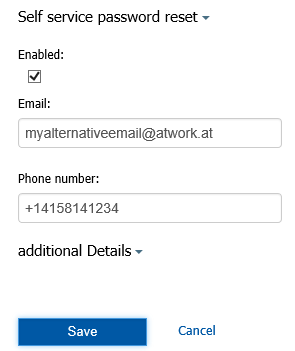
April/May 2014 Added User Self Password Reset (SPR): Now users (not only admins) can login into D365. If the admin had deposited a notification for the specific user (email or SMS), the user can perform a self password reset. When resetting the password the user can decide if he wants to receive the necessary security-code via email or SMS (depending on the settings made by the admins). Then he receives the code and gets a temporary password on the website. With that he can login and now has to change the password to his own, individual password. This function simplifies the administrative effort when users can use this reset on their own. This feature is integrated in D365. *So IT departements have no need to buy Azure premium licenses just for their users to perform self service password reset when using D365! * SMS is a preview function. If used, additional costs for the SMS provider will be added – depending on the location (country) and the amount of SMS messages which is usually about 10 Cent per SMS. ...

May 26, 2014 · 2 min · Toni Pohl
Lizenzkosten sparen mit Shared Mailboxen in Office 365

Lizenzkosten sparen mit Shared Mailboxen in Office 365

Eine tolle Alternative zu Public Foldern sind sogenannte Shared Mailboxen in Office 365. Diese haben bis zu 10 GB Speicher, kosten jedoch keine Lizenz. Durch Berechtigungen können diese automatisch in Outlook eingebunden werden, können E-Mail Nachrichten empfangen und haben auch sonst viele Funktionalitäten eines Mailaccounts. Wenn Sie nun eine bereits vergebene Mailbox in eine shared Mailbox umwandeln wollen, geht das sehr einfach über PowerShell. Zunächst verbinden Sie sich zum Service: $UserCredential = Get-Credential $Session = New-PSSession -ConfigurationName Microsoft.Exchange -ConnectionUri https://outlook.office365.com/powershell-liveid/ -Credential $UserCredential -Authentication Basic –AllowRedirection Import-PSSession $Session Get-MailboxStatistics <Alias> | FL Total* [![image](img_102.png)](img_102.png "image") Set-Mailbox –Identity [Alias] -Type "Shared" -ProhibitSendReceiveQuota 10GB -ProhibitSendQuota 9.75GB -IssueWarningQuota 9.5GB Sobald das gesetzt ist, erscheint nach kurzer Zeit im Portal die Mailbox unter den geteilten Ressourcen. Danach können Sie die Lizenz von dieser Mailbox entfernen.

May 22, 2014 · 1 min · Martina Grom
Say hello to the new Delegate365 website!

Say hello to the new Delegate365 website!

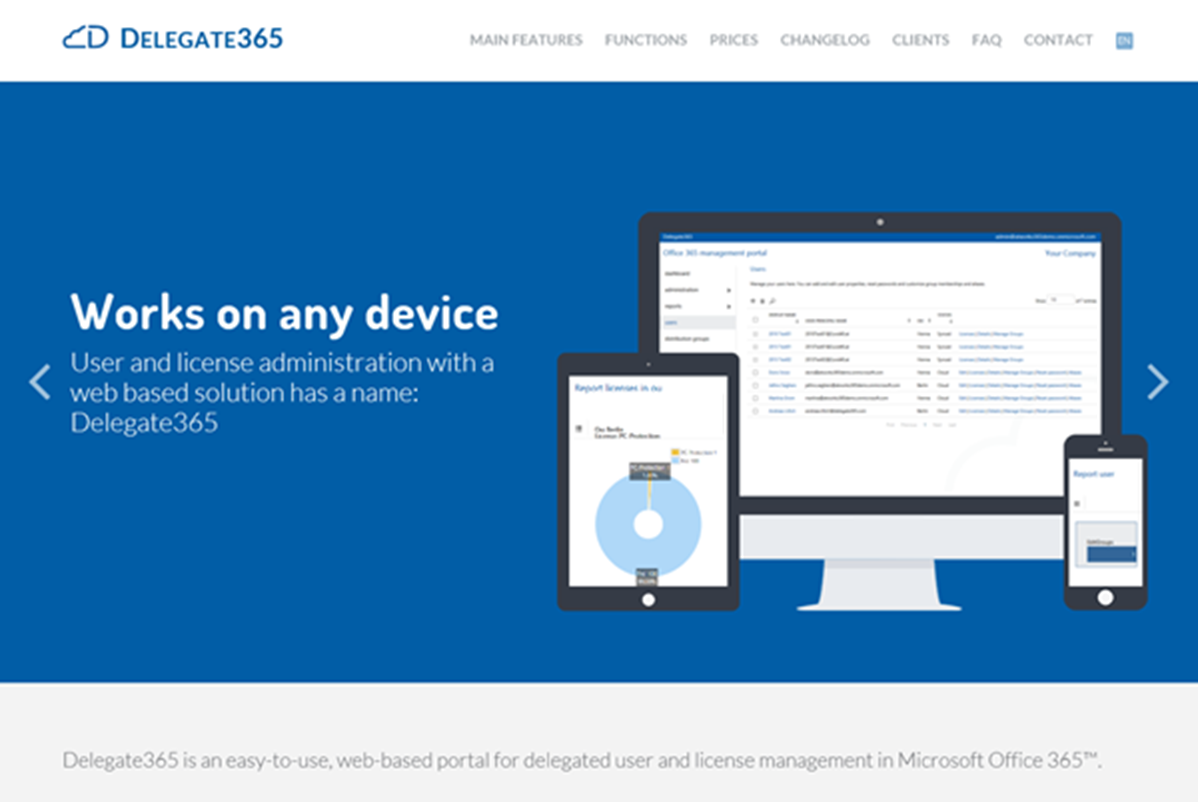
We´re happy to publish our new Delegate365.com website today! Since Delegate365 is a very attractive tool for managing users and licenses in Microsoft Office 365 it also deserves a top modern and fancy product website. So, here it is! Have a look and check it out! The redesign starts with our new logo for Delegate365, from the left it´s the cloud symbol going into a capitalized D followed by the product name. ...

May 22, 2014 · 1 min · Toni Pohl
Bye bye SharePoint AutoHosted Apps

Bye bye SharePoint AutoHosted Apps

Achtung, SharePoint Developer: Das Office Team hat bekanntgegeben, dass AutoHosted Apps in naher Zukunft nicht mehr möglich sind, siehe Update on Autohosted Apps Preview program. Die “Office 365 Autohosted Apps experience” ist ein Service aus der Preview von SharePoint 2013, welches nun mit 30. Juni 2014 eingestellt wird. Danach sind keine AutoHosted Apps mehr möglich. Anstelle der AutoHosted Apps treten die Provider-Hosted Apps. Apps, die derzeit im AutoHosted Service laufen sind davon nicht betroffen und laufen weiter. Wenn sich für diese existierenden Apps etwas ändern sollte, wird das Office Team dies ebenso in seinem Blog blogs.office.com veröffentlichen. ...

May 21, 2014 · 2 min · Toni Pohl
How to convert a user mailbox into a shared mailbox and save license costs in Office 365

How to convert a user mailbox into a shared mailbox and save license costs in Office 365

Today’s tip is a quick one: If you have licensed mailboxes you only need as additional E-Mail addresses with a separate E-Mail address you can think about converting them to shared mailboxes. Shared Mailboxes have 10GB free storage and there are no additional license costs. Setting the appropriate rights to the shared mailbox they will also automatically show up in Outlook. If you want to convert one of your licensed mailboxes to a shared mailbox you can do that with PowerShell. ...

May 19, 2014 · 1 min · Martina Grom
Delete Azure Active Directories

Delete Azure Active Directories

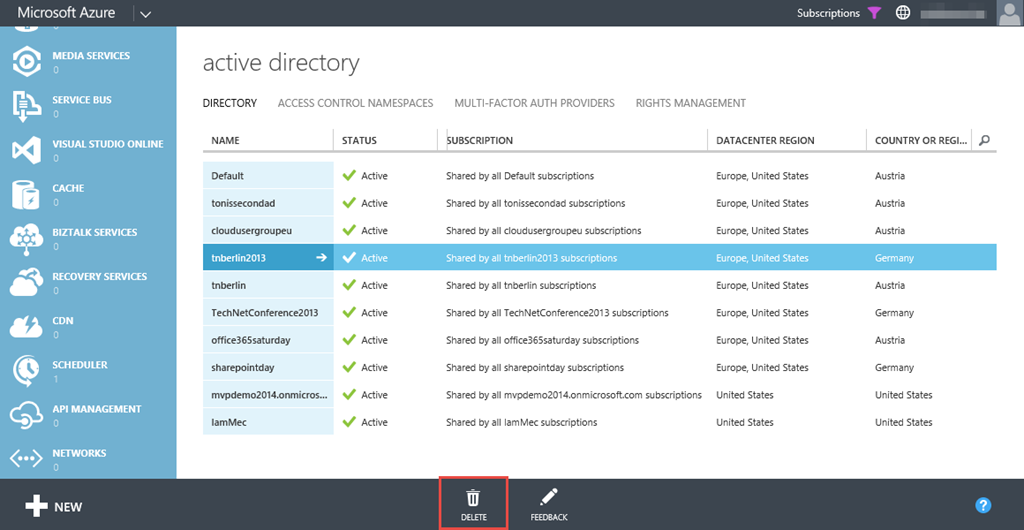
Have you seen it? Now it´s possible to *delete *Azure Active Directories from the Azure Portal! Just discovered this (long expected) feature shortly. Just an important information about deleting… When selecting an AD (mark the corresponding line right of the name…) and clicking the “Delete”-button… you maybe get a message like: *The following issue(s) prevent deletion of this directory: - Directory has one or more Multi-Factor Authentication providers. You are signed in as a user for whom ‘*.onmicrosoft.com’ is the home directory Directory is a “Partner” directory. Directory has never had an Azure subscription. Directory has one or more subscriptions to Microsoft Online Services. Directory has one or more applications. Directory has one or more applications. Delete all users except yourself ...

May 15, 2014 · 2 min · Toni Pohl
Eine Verteilerliste in Office 365 erstellen, die automatisch alle Mitglieder einer Abteilung enthält

Eine Verteilerliste in Office 365 erstellen, die automatisch alle Mitglieder einer Abteilung enthält

Viele Unternehmen, die von Small Business Server Umgebungen auf Office 365 umstellen, sind es gewohnt, einen Verteiler zu haben, der automatisch an alle Mitglieder des Unternehmens versendet. Aber auch große Unternehmen wollen Verteilerlisten mit bestimmten Kriterien automatisch befüllt haben. Um dies in Exchange Online abzubilden, benötigt man eine Dynamische Verteilerliste. In der Exchange Administrationskonsole kann man dann bequem eintragen, welche Kriterien die Verteilerliste haben soll und natürlich auch, welche Empfänger ausgewählt werden sollen. Hier kann man dann gleich einschränken, ob nur Mitglieder mit Exchange Postfächern, oder mit externen Mailadressen und vieles mehr selektiert werden sollen. Über Regeln können bereits in der GUI Filter gesetzt werden. ...

May 8, 2014 · 2 min · Martina Grom
European SharePoint Conference 2014 in Barcleona

European SharePoint Conference 2014 in Barcleona

European SharePoint Conference took place in Barcleona this year. After last year in February in Copenhagen now it´s time for sunny Catalonia in May for Sun, Sea, Sand and SharePoint! Many attendees used this opportunitiy for combining business with some holidays in these attractive location (see some tips here: 1, 2, 3, 4, 5, 6, 7, … after the top x lists there are so many things to see and to enjoy…). As last year, Martina (@magrom) had two sessions. ...

May 8, 2014 · 1 min · Toni Pohl
Automation von Azure-Teil 5

Automation von Azure-Teil 5

Weiter geht es mit WebDeploy und einem sehr hilfreichen Open Source Tool zum Deploying von Websites nach Microsoft Azure: WAWSDeploy von David Ebbo, der selbst Dev Lead im Team von Windows Azure Web Sites ist. David hat ein kleines Tool geschrieben um Web Deploy (aka msdeploy) stark zu vereinfachen. Simple Azure Web Sites deployment David formuliert den Grund für sein WAWSDeploy-Tool so: “However, in some cases, I just need to deploy a bunch of files from my local machine with minimal fuss, and using git is overkill.” - und er hat völlig Recht. Nur zum Deploying von Websites ist Git Overkill – wenn dann n Versionen von der Website im Azure Git-Repository herumkugeln. Danke an Christoph Wille für den Tipp zum Tool! ...

May 6, 2014 · 2 min · Toni Pohl