Delegate365 changelog version 6-overview

Delegate365 changelog version 6-overview

As posted in September at Delegate365 announcement about upcoming changes in version 6, we will update Delegate365 to version 6 shortly. Actually, we wanted to update all Delegate365 tenants already this November, but we have been very busy, so this update comes a little bit delayed. See the details here. Delegate365 stays as it is. We just figured out some things we can improve and add to the existing functionality. So, no worries, Delegate365 will stay as it is, but you can benefit from improved and new features. ...

December 1, 2016 · 3 min · Toni Pohl
Delegate365 announcement about upcoming changes in version 6

Delegate365 announcement about upcoming changes in version 6

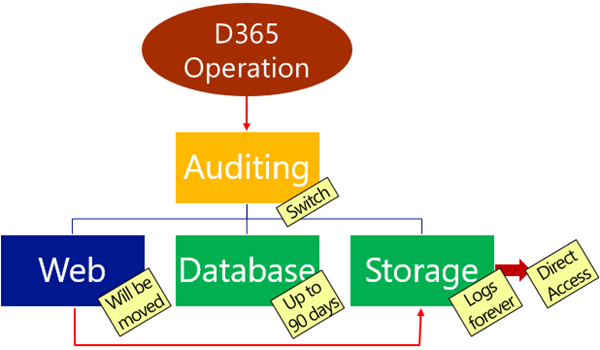
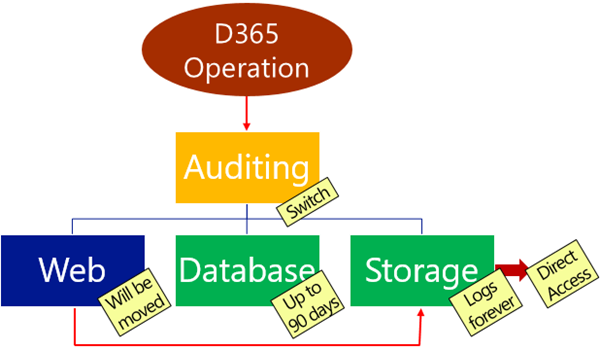
Delegate365 will receive a major update in October. This will be Delegate365 version 6 and will include a change in the audit logging system, a new license history and a preview for more custom automation features. Read the first details here. Change of logging: With the next update to version 6, the audit logging will be changed. There is a switch implemented which allows D365 to store logged data in various spaces and formats. The following graphics shows an overview at a glance about the planned features. Data will no longer be stored in the Web in CSV format, but in the D365 database for up to 90 days and in Azure storage in JSON format forever. Direct Access of Azure storage: Besides of the almost unlimited space in Azure storage, data in that storage can be accessed directly (if you have the permissions). This allows Portal Admins to generate a URL with a token with an expiration date to download the produced log files. The token is issued by D365, as tool you can download the logs with the cost free Microsoft Azure Storage Explorer. Daily Office 365 license statistics: To see the real usage of licenses per OU and per day, week, month or year, D365 stores daily data from now on. This data will be available for further usage. More Automation: We got a lot of feedback about implementing custom actions in D365, for example setting specific user properties, assigning custom licenses for specific users, setting Skype for Business policies for users in OU’s and so on. To avoid a cost intensive customization we decided to go another way: We are implementing scripts (like “Macros”) with a powerful editor with intellisense that can execute… PowerShell! Yes, you read correctly. D365 will support PowerShell commands and whole scripts for fulfilling custom tasks in Office 365! We are currently developing and testing and plan to update D365 with this module in mid to late October. The working title for this feature is “D365 Automation”. Any other suggestions? More: Improvements in the Sync operation, fixes and some more features… You see there are cool features coming to Delegate365 version 6. Stay tuned! ...
September 12, 2016 · 2 min · Toni Pohl
Delegate365 Roles and Notifications

Delegate365 Roles and Notifications

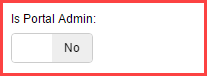
Delegate365 can send notifications for specific operations. Here’s a short overview of roles and in which situations notifications are sent. Who can get notifications? In Delegate365 we have these roles a user can have for using the portal. Portal Admins: They have full access to all features and can configure D365. Scope Admins: They have administrative management features for “their” users, licenses and groups. The difference between Portal and Scope Admins is simply the switch “Is Portal Admin” in the administration / manage administrators and Edit admin feature (see the full screenshot below). License Admins: This can be Portal Admins or Scope Admins. They are defined in the administration / manage administrators and Edit admin feature with the switch “License Administrator” (see the full screenshot below). They can manage license requests. Users: Standard users who can use the D365 Self service password reset feature (SSPR). All user types can receive emails (or SMS) from D365, but their email notification must be configured. ...

September 10, 2016 · 3 min · Toni Pohl
Delegate365 changelog version 5.3.2-Fixes

Delegate365 changelog version 5.3.2-Fixes

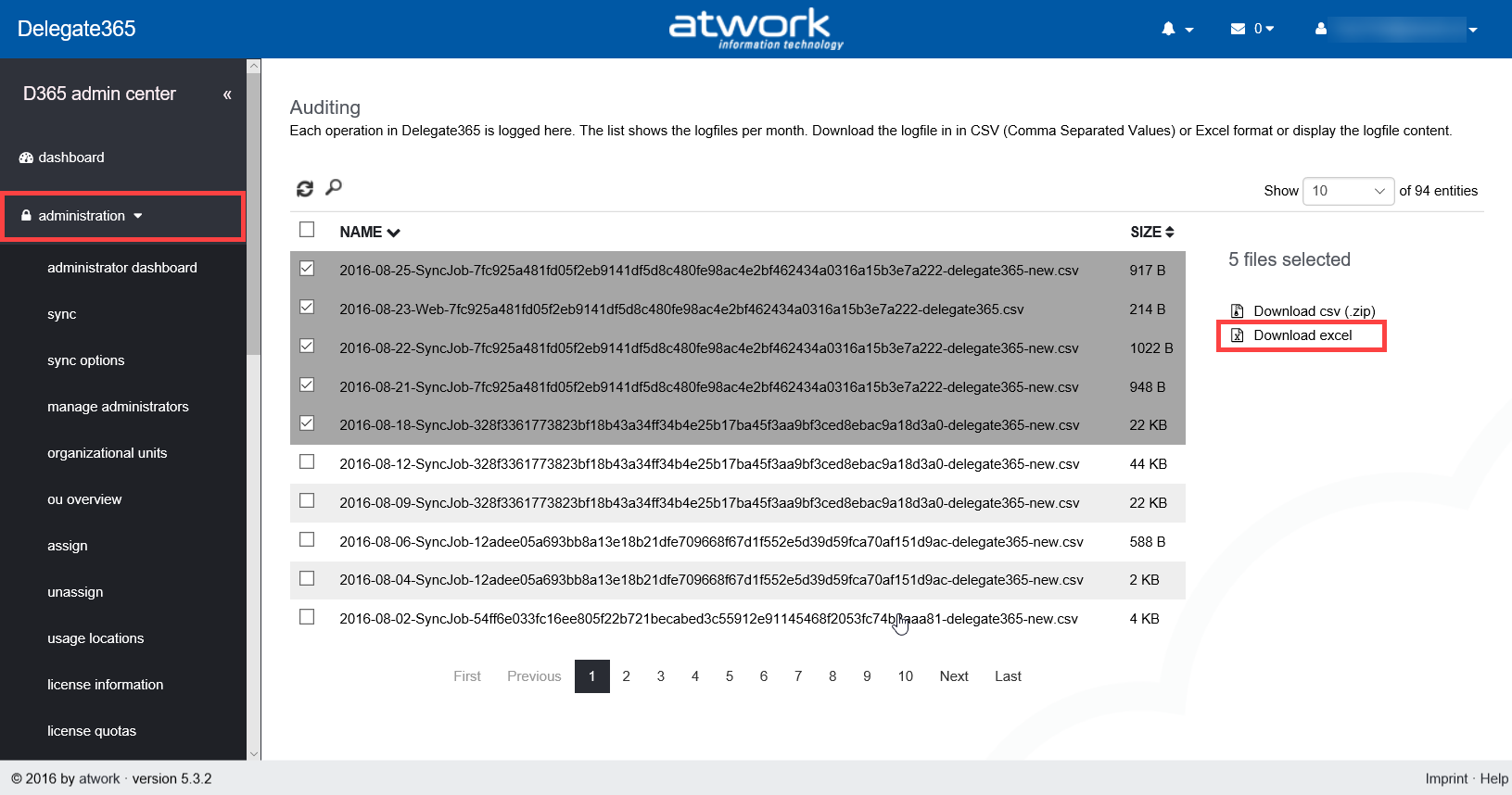
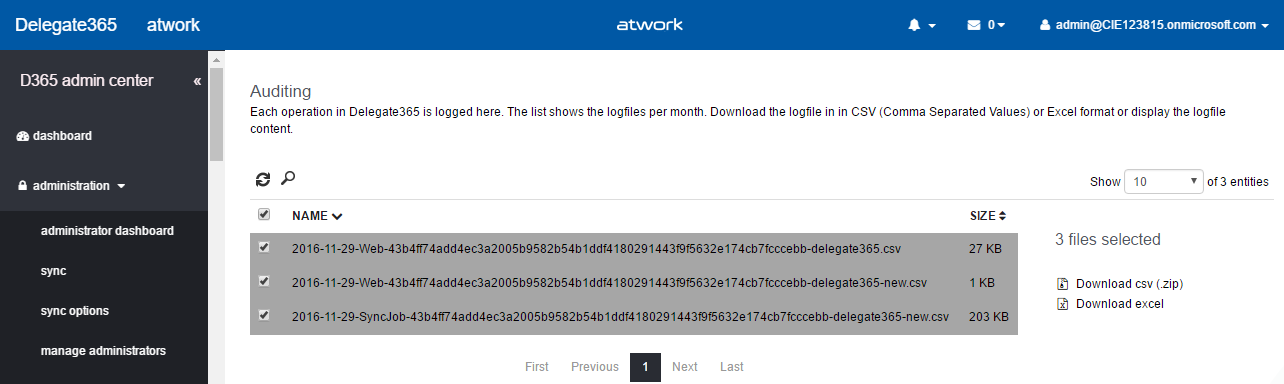
Summertime (and holiday season) is almost over and we were busy to advance Delegate365. In the last weeks we concentrated on smaller fixes which resulted in Delegate365 version 5.3.2. Major updates will follow in fall time. So here’s a list of the current fixes: Auditing: When selecting and downloading multiple log files in the administration / auditing menu, there was an issue if the Excel format was created. Then the name of the sheets in the Excel file were too long (since the created filenames were extended with the instance name in previous versions). Therefore the creation of the download package did not work. We fixed that with version 5.3.1 and later versions. Pls. remember that the logfiles can be extensive and the creation of the ZIP or XLSX files can take a while. We recommend not to select too many files in one step but to select only a handful of files to download. We are working on an automation of logfile downloads which will be available in future. ...

August 27, 2016 · 2 min · Toni Pohl
Access or export mailbox content in Delegate365 and eDiscovery

Access or export mailbox content in Delegate365 and eDiscovery

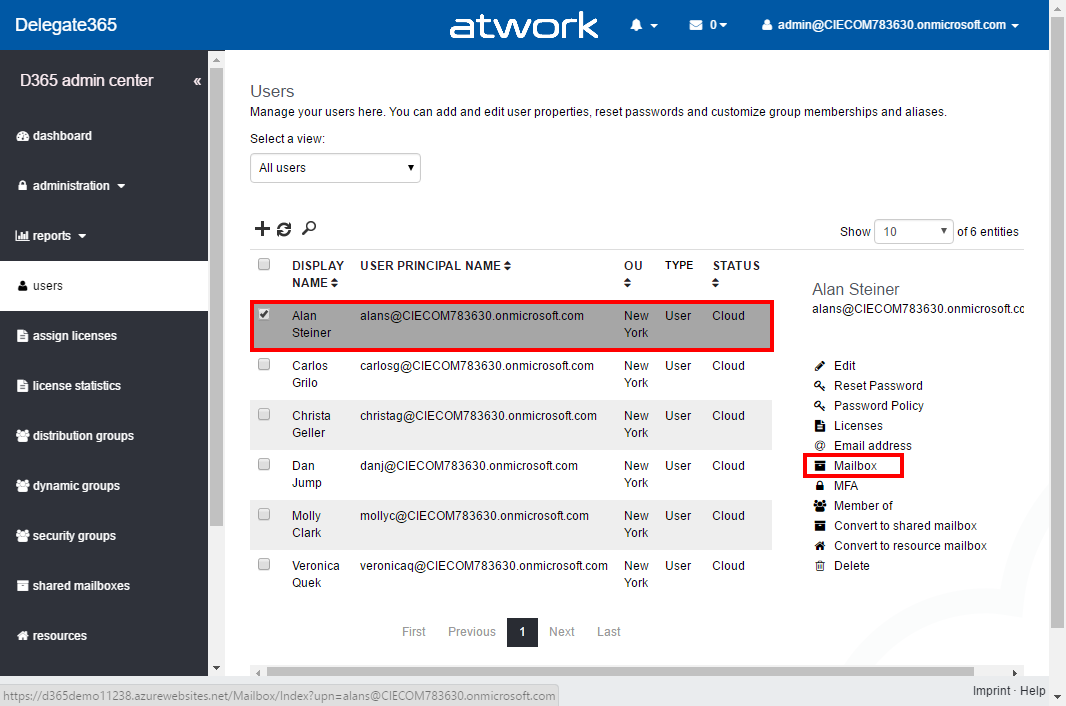
We sometimes receive questions how users can access the content of another user’s mailbox. Well, in Delegate365 you can manage the permissions, but not the content. See how to access other mailboxes, how to export and what eDiscovery is for. First, let’s see how we can assign permissions to another users mailbox in Delegate365. Assign permissions to a mailbox in Delegate365 The easiest way is, to assign mailbox permissions to another user. In Delegate365 this can be accomplished in the users list. Select the user and click “Mailbox”. (If that menu is missing in your Delegate365 portal, ask your Portal Admins to assign you the permission to use that feature.) ...

July 27, 2016 · 4 min · Toni Pohl
Delegate365 changelog version 5.3-Auto licensing for existing users

Delegate365 changelog version 5.3-Auto licensing for existing users

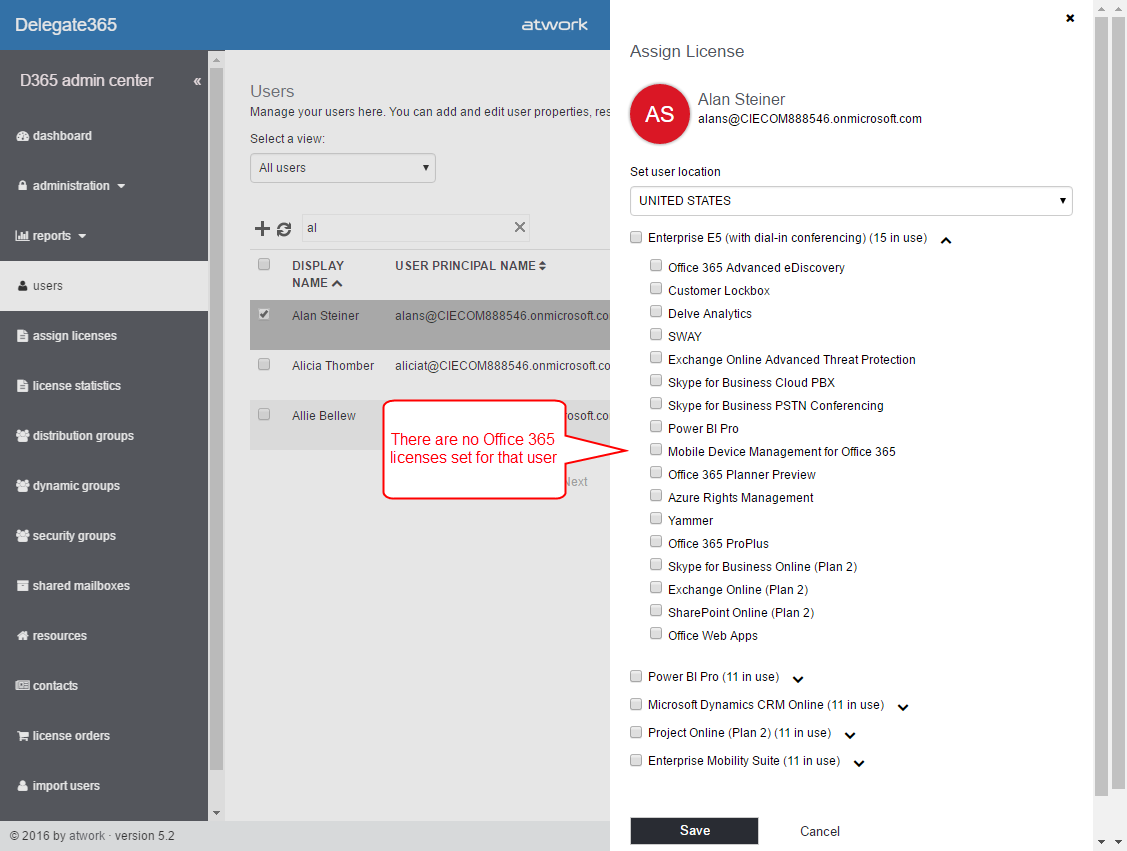
Delegate365 version 5.2 has many new features (see here). In D365 version 5.3 we have a new feature for changing Office 365 licenses for users with already assigned OU’s. This article describes how this works in detail with an example, step by step. Why did we add this feature? Well, a D365 customer had the requirement to auto assign Office 365 licenses. This could already be done in the previous versions of D365. But the peculiarity was that Office 365 licenses should be set gradually. So for example, in May users of an OU should get a license for SharePoint Online, in June for Yammer and in July for Exchange Online. This is a special use case which could only be done in D365 manually or partly, but not automatically. So we added this feature in the product. ...

May 16, 2016 · 4 min · Toni Pohl
Delegate365 changelog version 5.2-Dynamic Groups and new configuration rules

Delegate365 changelog version 5.2-Dynamic Groups and new configuration rules

Delegate365 version 5.2 is here. We skipped version 5.1 because of many new features (which would have been version 5.1) and the OpenID Connect authentication update (which we changed in version 5.2). So we combined both updates in version 5.2 to minimize the effort. If you are coming from D365 version 5.0 you have not missed anything. See the new features of version 5.2 described in here. Important: For the update of your existing D365 tenant, it is necessary to run the Delegate365 Setup again. Please see Delegate365 now uses OpenID Connect - or how to run setup to update to version 5.2 for the step-by-step details. ...

May 12, 2016 · 7 min · Toni Pohl
Delegate365 now uses OpenID Connect - or how to run setup to update to version 5.2

Delegate365 now uses OpenID Connect - or how to run setup to update to version 5.2

This method has been deprecated since 2020 and is no longer available. The content in this article is provided for historical reference only. The next version of Delegate365 will be version 5.2. This article describes the necessary steps to use the new version – and why. Maybe you have recognized that we skip version 5.1. Well, the reason is that we added some new features in version 5.1 (an article with the new features will be posted shortly) and then we switched the authentication system. So we decided to do only one upgrade process and continue with version 5.2 (with the new authentication). So after version 5.0 now there comes 5.2 (you have not missed anything). ...

April 14, 2016 · 4 min · Toni Pohl
Delegate365 customers URL change step-by-step guide

Delegate365 customers URL change step-by-step guide

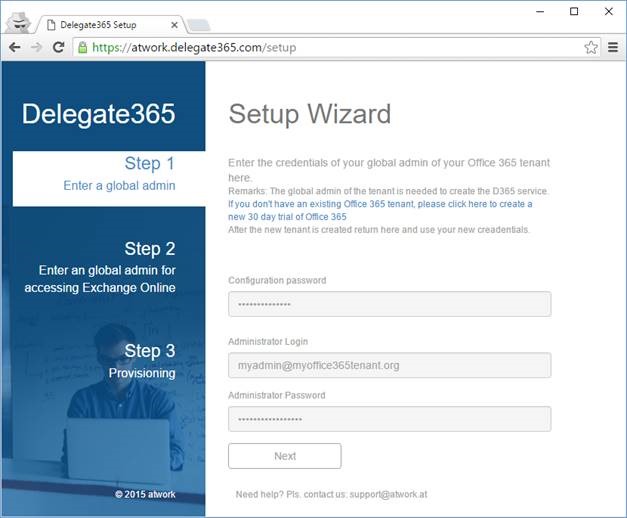
This method using /setup has been deprecated since 2020 and is no longer available. Use setup.delegate365.com instead. The content in this article is provided for historical reference only. As posted in Delegate365 customers URL change, it is required to create a new service account with a redirection to the new *.delegate365.com domain. After your Delegate365 portal is reachable with the new URL https://[yourcompanyname].delegate365.com, pls. follow these steps. Requirements: Your Delegate365 portal must already be accessible with the new URL https://[yourcompanyname].delegate365.com (already prepared by atwork). You need to have a Global Admin account and password of your Office 365 tenant to perform these steps. You need to have the Delegate365 configuration password. If you don’t have that password, pls. contact support@atwork.at Important: ...

March 16, 2016 · 2 min · Toni Pohl
Delegate365 customers URL change

Delegate365 customers URL change

This method using /setup has been deprecated since 2020 and is no longer available. Use setup.delegate365.com instead. The content in this article is provided for historical reference only. Delegate365 runs completely in the cloud on the Microsoft Azure platform. So every (prospective) customer got a personal D365 tenant with an URL of https://D365[customername].azurewebsites.net. For customers, the Delegate365 portal URL will be changed to https://[customername].delegate365.com shortly. There are two reasons for the usage of the new URL. First, the background management of the D365 portal is easier with a custom URL, for example that each customer portal can be scaled and moved without URL change. Secondly, the custom delegate365.com domain is nicer and easier to remember than the default azurewebsites.net URL. It’s more convenient in both ways. ...

March 14, 2016 · 2 min · Toni Pohl